Ink Blossom: An Interactive Journey of AI-Powered Traditional Embroidery Creation
An interactive installation combining generative AI with the intangible cultural heritage of traditional ethnic embroidery from China.
An interactive installation combining generative AI with the intangible cultural heritage of traditional ethnic embroidery from China.
Ink Blossom is an interactive installation combining generative AI with the intangible cultural heritage of traditional ethnic embroidery from China. Integrating a tangible wooden embroidery frame with a dynamic digital canvas, the project invites participants to co-create with AI in real-time, transforming hand-drawn sketches into authentic embroidery designs. Utilizing custom-trained LoRA models, the system preserves the distinct visual languages of Miao and Qiang embroidery, allowing users to creatively engage with traditional forms. Participant feedback reveals that generative AI deepens their personal connections with these ancient crafts, proposing an innovative collaborative future for the preservation of intangible cultural heritage.
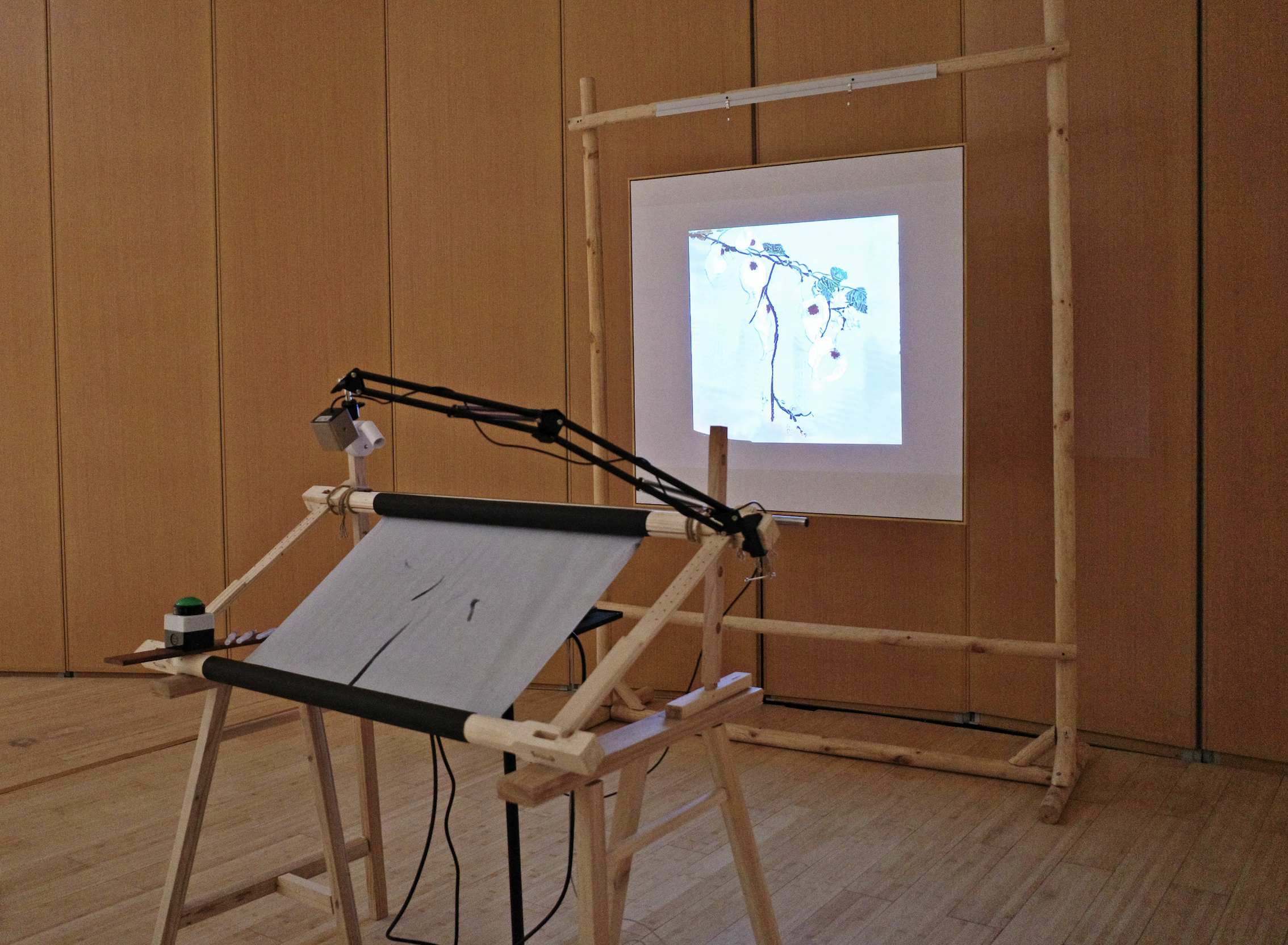
Ink Blossom reimagines traditional embroidery as an interactive space for human-AI collaboration and cultural inheritance. It integrates physical craftsmanship with modern digital creation, featuring a physical embroidery station—a wooden frame that recreates the tactile and ritualistic qualities of traditional embroidery. And a digital canvas, which uses real-time generative algorithms to provide participants with immediate visual interactive experiences (Figure 1).
Miao and Qiang embroideries, recognized as significant Chinese intangible cultural heritage, represent traditions dating back thousands of years among the Miao and Qiang ethnic minorities [1, 3]. Traditionally, artisans dedicate months to meticulously crafting intricate patterns using diverse stitching techniques passed down through generations. Here, visitors are invited to simulate this experience by drawing freely on a tangible canvas, with their sketches captured by an overhead camera. The AI interprets these sketches, instantly generating culturally faithful embroidery visuals projected onto a digital canvas. The interaction process is shown in Figure 2.

Figure 2: The interaction process.
Image generation is implemented based on two custom-trained LoRA models [2], representing two distinctive traditional embroidery styles from ethnic minorities: the floral ‘Love Flower’ motifs characteristic of Miao embroidery and the geometric aesthetics of Qiang embroidery (Figure 3). Participants can select the desired style via different buttons. The system encodes the unique stylistic features and compositional principles of each tradition, preserving cultural authenticity. Independent generative models prevent cultural homogenization by AI and enable future integration of additional embroidery styles.
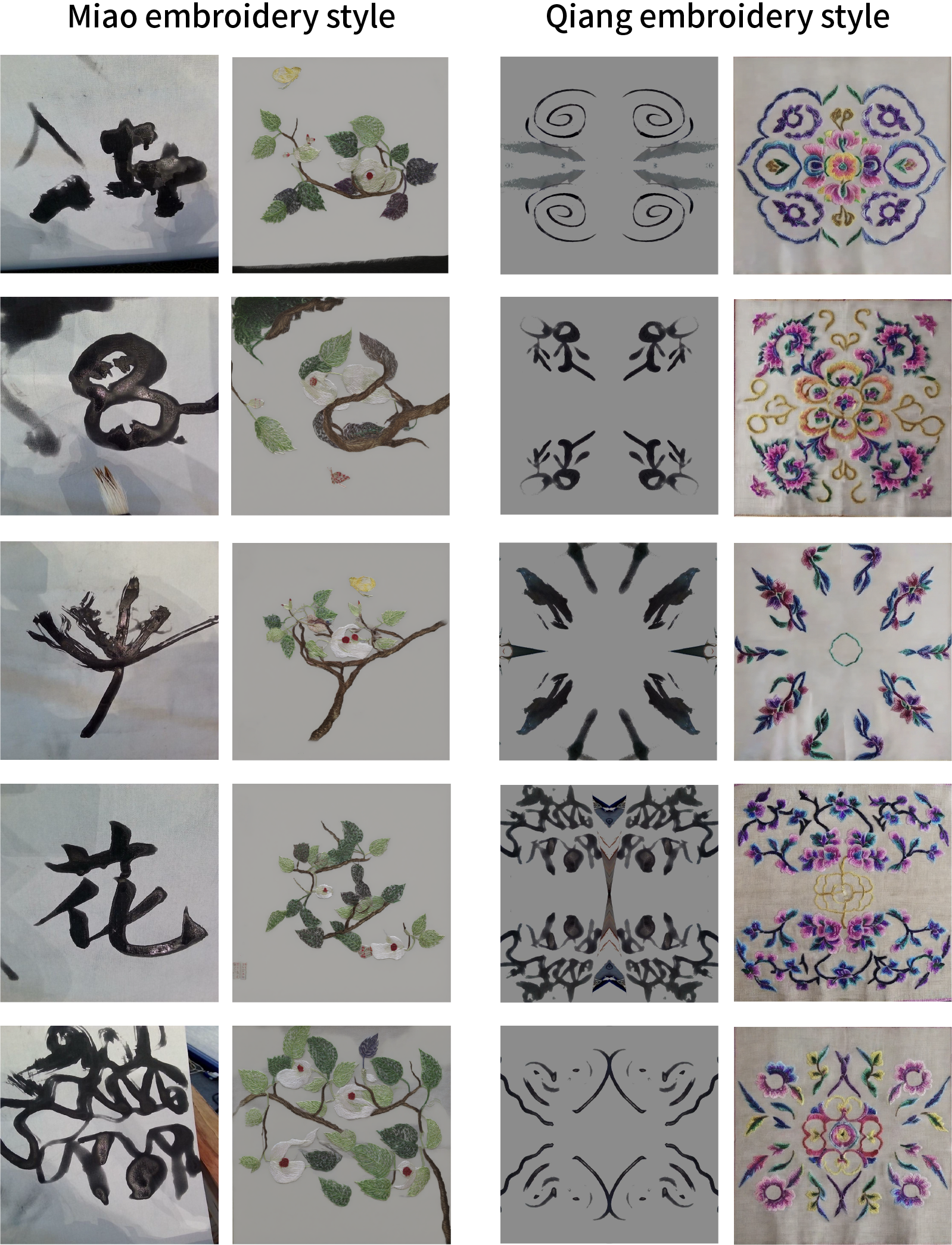
Figure 3: User sketches and corresponding generated results for Miao embroidery (left) and Qiang embroidery (right) styles.
Inspired by the Chinese idiom "妙笔生花," which speaks of a brush so skilled it brings forth blooming flowers, our project brings this magic in the digital age. We aim to let threads of tradition merge with lines of code, allowing each AI-generated flower to carry the memory of centuries-old craftsmanship. To ground this vision in authentic cultural practice, we conducted a two-week field study in August 2024, exploring embroidery companies in Tongren, Guizhou province (the birthplace of Songtao Miao embroidery), and in the Qiang ethnic regions of western Sichuan. We documented hundreds of embroidery patterns, interviewed artisans, and annotated stitch techniques to establish an initial dataset, crucial for ensuring authenticity in our AI-generated textures and patterns.
By October 2024, the installation was completed and exhibited in several cities, including the 9th International Intangible Cultural Heritage Festival in Chengdu, the Hong Kong University of Science and Technology (Guangzhou) Digital Media Art Exhibition, NYU Shanghai’s IMA Gallery ‘Digital Qiang Garden: Pixel and Threads,’ and the rural village of Pingyuan Shao in Guizhou. These exhibitions collectively attracted over 5,000 interactive experiences.
Participant feedback has been deeply insightful, demonstrating how generative AI empowers humans. Many participants moved from initial hesitation—"I can’t draw"—to confidently stating, "I designed a beautiful embroidery pattern." Others noted that generative AI enabled more personal and meaningful engagement with traditional crafts that once seemed distant or inaccessible. Particularly encouraging was the response from master embroiderers and cultural inheritors, who recognized the tool’s potential to enhance their creative processes while preserving cultural authenticity. These experts highlighted the commercial prospects of AI-assisted traditional craft production and expressed eagerness to see digital designs realized as physical embroidery.
For future work, we aim to bridge digital and physical creation, completing the loop from screen to fabric—honoring tradition by letting digital ink blossom into embroidered art and heritage evolve through code, experience, and connection.
We gratefully acknowledge Liping SHI, National Representative Inheritor of Songtao Miao Embroidery Intangible Cultural Heritage, and the Digital Qiang Garden Residency for their generous support. Their contributions of exemplary embroidery works and cultural expertise were essential to the authenticity and innovation of this project.