Characterizing Collective Efforts in Content Sharing and Quality Control for ADHD-relevant Content on Video-sharing Platforms

Characterizing Collective Efforts in Content Sharing and Quality Control for ADHD-relevant Content on Video-sharing Platforms

Hanxiu ‘Hazel’ Zhu, Avanthika Senthil Kumar, Sihang Zhao, Ru Wang, Xin Tong, and Yuhang Zhao
The 27th International ACM SIGACCESS Conference on Computers and Accessibility (ASSETS ’25)

Abstract

Video-sharing platforms (VSPs) have become increasingly important for individuals with ADHD to recognize symptoms, acquire knowledge, and receive support. While videos offer rich information and high engagement, they also present unique challenges, such as information quality and accessibility issues to users with ADHD. However, little work has thoroughly examined the video content quality and accessibility issues, the impact, and the control strategies in the ADHD community. We fill this gap by systematically collecting 373 ADHD-relevant videos with comments from YouTube and TikTok and analyzing the data with a mixed method. Our study identified the characteristics of ADHD-relevant videos on VSPs (e.g., creator types, video presentation forms, quality issues) and revealed the collective efforts of creators and viewers in video quality control, such as authority building, collective quality checking, and accessibility improvement. We further derive actionable design implications for VSPs to offer more reliable and ADHD-friendly content.

Abstract

Video-sharing platforms (VSPs) have become increasingly important for individuals with ADHD to recognize symptoms, acquire knowledge, and receive support. While videos offer rich information and high engagement, they also present unique challenges, such as information quality and accessibility issues to users with ADHD. However, little work has thoroughly examined the video content quality and accessibility issues, the impact, and the control strategies in the ADHD community. We fill this gap by systematically collecting 373 ADHD-relevant videos with comments from YouTube and TikTok and analyzing the data with a mixed method. Our study identified the characteristics of ADHD-relevant videos on VSPs (e.g., creator types, video presentation forms, quality issues) and revealed the collective efforts of creators and viewers in video quality control, such as authority building, collective quality checking, and accessibility improvement. We further derive actionable design implications for VSPs to offer more reliable and ADHD-friendly content.

1. Introduction

Attention Deficit Hyperactivity Disorder (ADHD) has received increasing attention in recent years as more individuals recognize their symptoms and seek diagnosis and support. Despite the growing awareness, misconceptions about ADHD persist, such as the belief that it affects only White boys [15] or that individuals have to exhibit hyperactivity [38]. These misconceptions leave many people unaware of their ADHD, and even people who recognize their symptoms often face difficulties in obtaining proper diagnosis and treatment [8]. As a result, information and resources online have been crucial for individuals with ADHD to identify and understand their symptoms and experiences and seek support from peers [18]. Among various social media platforms, video-sharing platforms (VSPs), such as TikTok and YouTube, have become an emerging medium for people with ADHD to share experiences and exchange information [75]. Unlike conventional text- or image-based media, videos offer richer information via multimodal channels, enabling increased engagement, higher persuasiveness, and more effective behavior intervention [43, 83]. This has led to a surge in the ADHD audience as well as ADHD-relevant content on VSPs. For example, by June 2024, TikTok had more than three million video posts and 25 billion views under the hashtag “#adhd,” highlighting the influence of VSPs on ADHD-relevant discussions.

Recent research has started examining the experiences of ADHD users with VSPs [18, 40, 49]. For example, Eagle and Ringland [18] conducted a digital ethnography study to analyze ADHD-relevant posts and comments on Twitter, Instagram, and TikTok, and identified TikTok as a valuable source of shared expertise for people with ADHD. These works mainly focused on the community-building and content-sharing experiences of ADHD users, without deeply investigating the potential content quality and delivery issues brought by the unique video form.

Video content can bring unique risks and challenges to users with ADHD. The high information richness and less controllable content flow in videos make it particularly challenging to identify and combat misinformation [55], potentially leading to hasty ADHD self-diagnosis and misunderstanding [22]. The multimodal nature of videos could also bring unique perceptual challenges to ADHD viewers [54]. To reveal the content quality issues on VSPs, Yeung et al. [86] and Thapa et al. [75] examined the prevalence of misleading ADHD content on TikTok and YouTube respectively by asking medical experts to rate video quality using existing or self-devised information quality frameworks. However, both works focused on quantitative measures through a medical lens, overlooking the complexity and nuances of user reactions, challenges, and strategies in video quality control. With the increasing amount of ADHD-relevant videos online, it is critical to deeply investigate the characteristics of such videos on VSPs, their content quality and accessibility issues for ADHD users, and how ADHD creators and viewers respond to and combat these issues, thus inspiring a more inclusive, safe, and trustworthy VSP community for ADHD.

2. Background & Related Work

2.1 ADHD: Diagnostic Challenges

Attention-deficit/hyperactivity disorder (ADHD) is a neurodevelopmental disorder that affects 7.6% of children and 6.8% of adults [61]. People with ADHD could display inattention and/or hyperactivity/impulsivity [82], and poorly managed ADHD could put people under various risks, including low self-esteem, underachievement, and substance abuse [80]. Despite the prevalence of ADHD and the importance of timely recognition and treatment, diagnosing ADHD can be challenging. Previously known as hyperkinetic behavior syndrome, ADHD was originally characterized as a childhood disorder that mainly affects boys who exhibit disruptive behaviors [38]. As a result, children who have the inattentive sub-type of ADHD have more difficulties getting a timely diagnosis and intervention in childhood [68]. Additionally, biases along the axes of age, gender, and race also contribute to diagnostic challenges. Adults [23, 53, 60], women [34, 88], people of color [65, 93], and their intersections [8, 51, 78] are more likely to experience undiagnosed or misdiagnosed ADHD, as their experiences are misinterpreted or dismissed [8, 29]. For individuals who failed to have their ADHD diagnosed early, they gradually adopt coping strategies or masking techniques to fit into their environment, making their ADHD presentations even less identifiable [2, 37]. As a result, self-exploration and awareness become crucial for people with undiagnosed ADHD to realize the need to seek help [39, 58]. Social media thus becomes an indispensable source for users with ADHD. While ADHD affects each individual differently, research has shown that people with ADHD could be particularly attracted to social media [7], a condition that was exacerbated during the COVID-19 lockdown [81]. We unpack the impact of social media on ADHD and the broader health community below.

2.2 Using Social Media for Health Purposes

Conventional text/image-based social media platforms, including Facebook, Reddit, and Twitter, have long been used to support users with health needs in sharing experiences, exchanging support, and deconstructing stereotypes [20, 62, 76]. More recently, however, video-sharing platforms (VSPs) have emerged rapidly among health communities, since videos afford particularly rich information and fast propagation [41]. YouTube and TikTok are the two most prominent VSPs in the U.S., with 83% of adults reported using YouTube and 33% using TikTok [59]. Both platforms bring increasing impact on the dissemination of a wide range of health-related content [48].

2.3 Quality of Health Contents on Social Media

Despite the important role thatsocial media playsin offering health-relevant content, research hascalled the quality of such content into question. Numerous efforts in the health field have been made to assess the quality of health information on various social media platforms, covering topics of drugs [5, 85], vaccines[10, 63], chronic illnesses [13, 52], pandemics [3, 19], and mental health [46, 71], and discovered that 30% to 87% of posts on different social media platforms contain misinformation [73]. The content quality issues for ADHD-relevant videos on VSPs can be more severe and challenging due to the rich, multimodal, and less controllable nature of videos [55]. For example, Thapa et al. [75] collected ADHD-relevant videos on YouTube, rated the video quality with a self-devised scoring system, and identified 38.4% of the videos as misleading. More recently, Yeung et al. [86] invited experts to rate the top 100 videos under the hashtag “#adhd” on TikTok in 2022, and identified 52% as misleading. However, although prior work has highlighted the potential content quality risk of ADHD-relevant videos, such quantitative evaluation of ADHD video quality relied on a score-based assessment system developed from a clinical lens [9], without diving into creators’ and viewers’ reactions, practices, and challenges when combating video quality issues. Such clinical criteria are usually not well-suited for videos that share unique personal experiences— an important type of content for ADHD community building and experience sharing [18]. This gap highlights the need for a more nuanced and thorough approach to examine the characteristics, qualities, and impact of ADHD content on VSPs.

3. Methodology

Our work seeks to understand how ADHD community members on VSPs share, consume, and evaluate content. We collected and analyzed both ADHD-relevant videos and comments to understand video characteristics and user interaction dynamics.

We adopted a mixed-methods approach. Quantitatively, we characterized creator types, content types, and video forms across platforms and compared distributions using chi-square tests with Bonferroni correction. Qualitatively, we conducted thematic analysis on enriched video transcripts and comments to uncover challenges, strategies, and social dynamics in content quality control and accessibility.

3.1 Platform Choices

We focused on YouTube and TikTok, two of the most popular video-sharing platforms in the United States that both host active ADHD discussions and have been criticized for mixed information quality. To highlight platform differences, we primarily examined standard-length videos on YouTube and short-form videos on TikTok.

3.2 Data Collection & Sampling

We systematically collected ADHD-relevant videos, metadata, descriptions, creator profiles, and the top 20 comments under each video. On TikTok, we used a hashtag-based strategy starting from #adhd and iteratively expanding to 55 ADHD-related hashtags. On YouTube, we constructed 26 ADHD topic categories (e.g., parenting, diagnosis, workplace, tools & technologies) and combined each with the keyword “ADHD” for video search. After removing duplicates, filtering for English videos with at least 20 comments, and applying critical case sampling to balance topics and popularity, we obtained a final dataset of 184 TikTok and 189 YouTube videos.

3.3 Data Analysis

For qualitative analysis, two to four researchers collaboratively developed codebooks for both videos and comments via open coding and iterative refinement, eventually yielding over 60 video codes and 90 comment codes. We then performed axial coding to group related codes into higher-level themes and cross-referenced video and comment codes to examine how content characteristics, quality indicators, and accessibility issues interacted with viewers’ perceptions and behaviors.

4. Findings

In this section, we present the main findings from our mixed methods analysis, including quantitative results on the characteristics of ADHD-relevant videos, the collective efforts by creators and viewers in video quality control alongside their challenges, and ADHD-relevant accessibility issues and practices in video creation.

Platform-level content characteristics. TikTok is dominated by self-identified individuals with ADHD sharing short, humorous, and experiential content, while YouTube features more institutions, organizations, and health professionals producing longer, educational videos. Both platforms frequently cover ADHD symptoms and lived experiences, but YouTube includes significantly more medical information, demographic discussions, advocacy content, and practical tips, reflecting its more “authoritative” orientation.

Collective quality control practices. Content quality control emerges as a collective effort. Creators signal authorship and credibility through identity disclosure, references, and disclaimers, and platforms occasionally highlight licensed health professionals. Viewers actively participate in quality checking by challenging misleading content, pointing out factual errors, and sharing alternative experiences in comments; however, vague credentials, irrelevant references, and low visibility of disclaimers can still mislead viewers or obscure creators’ intentions.

Accessibility and perceptual gaps. For ADHD viewers, video length, slow pace, distracting sounds and visuals, and incorrect or missing captions critically affect accessibility. Community-driven practices such as using video chapters and comment-based timestamps help make long videos more digestible, yet professional talks and documentaries often remain hard to follow. We also surface perceptual gaps between professional creators and ADHD viewers (e.g., attitudes toward stimulant use and self-diagnosis), which shape how viewers interpret “authoritative” content and make help-seeking decisions.
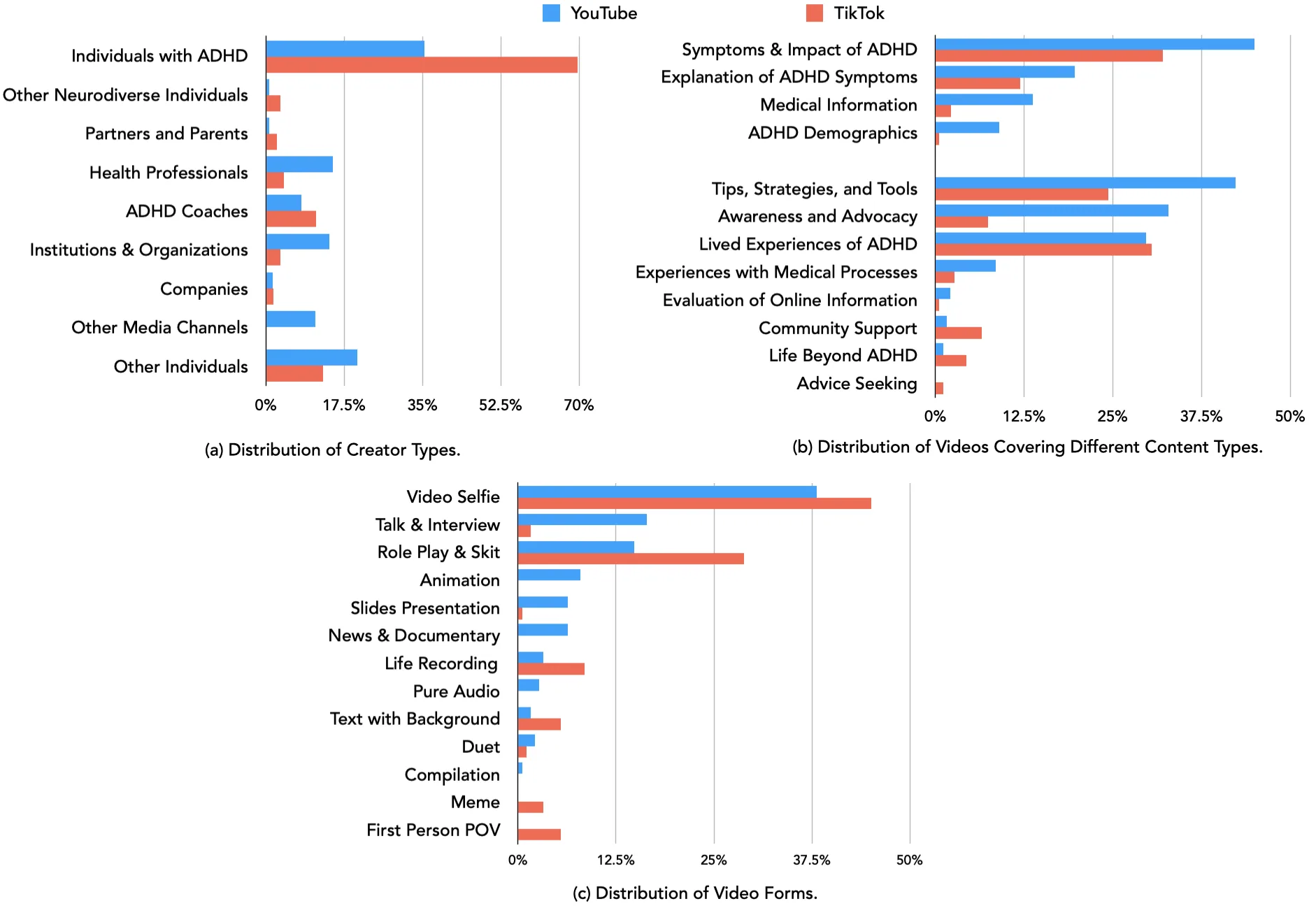
Figure 1: Creator and video distributions on YouTube and TikTok.

Figure 1: Creator and video distributions on YouTube and TikTok. (a) Distributions of creator types; (b) Distributions of videos convering different contents; (c) Distributions of video forms.
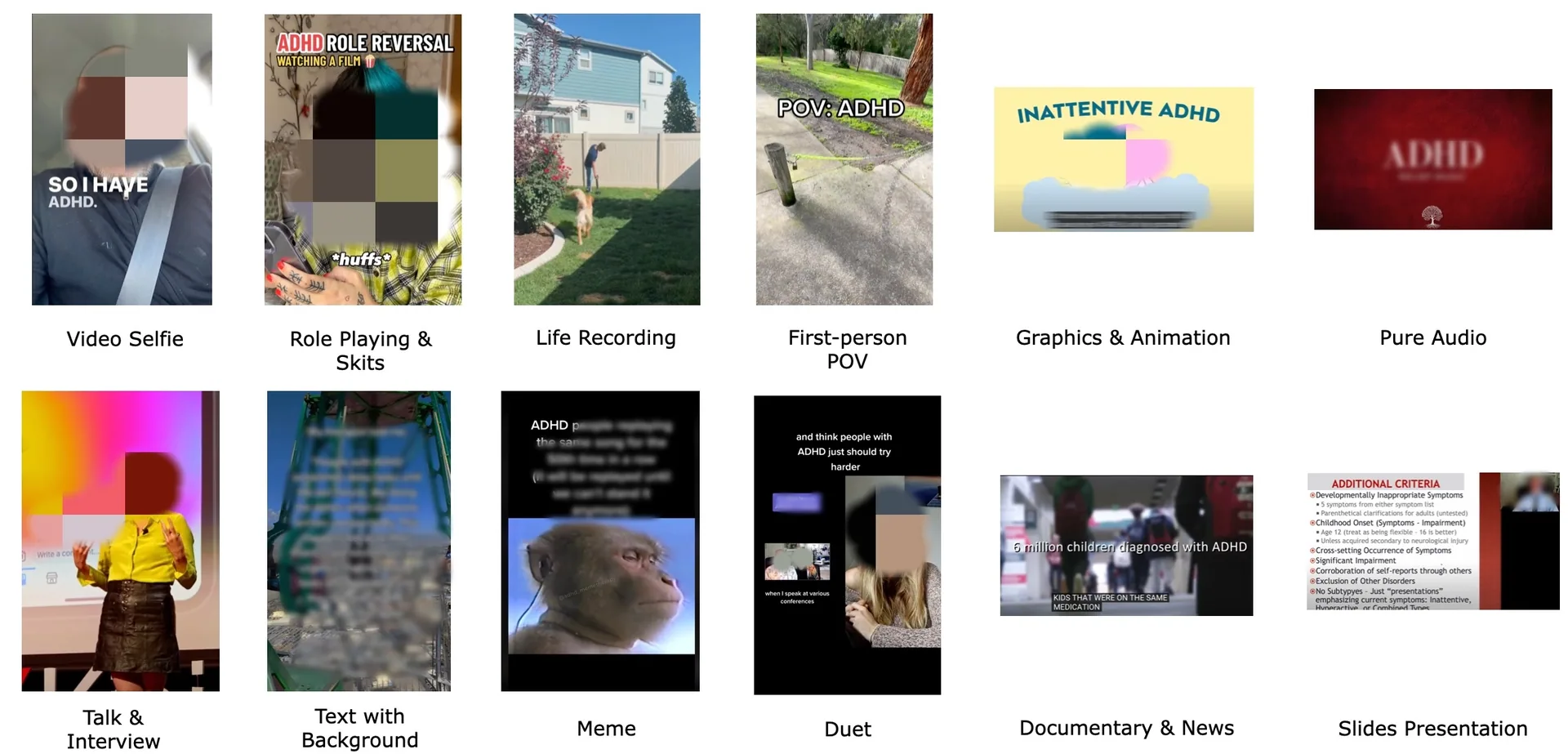
Figure 2: Examples of different videos forms except for compilation.

Figure 2: Examples of different videos forms except for compilation. A compilation video could consist of multiple forms above.


5. Discussion

Our research has contributed an in-depth examination of long and short-form ADHD-relevant videos across different video platforms, uncovering video quality issues, user strategies, and challenges via a mixed-method approach.

First, we show that video content quality control on social media is a collective process involving platforms, creators, and viewers, but existing mechanisms are not well tailored to ADHD viewers. For example, debunking videos by health professionals are often long and cognitively demanding, which may limit their effectiveness for audiences who struggle with sustained attention and complex multimodal layouts.

Second, we highlight tensions between clinical standards for “high-quality” health information and the lived realities of ADHD and broader neurodivergent communities. Practices such as discouraging self-diagnosis or framing ADHD purely as a deficit can inadvertently marginalize self-diagnosed individuals and overlook the neurodiversity movement’s emphasis on validating diverse identities and coping strategies.

Finally, we derive design implications for building safer and more ADHD-inclusive VSPs, such as supporting customizable, distraction-reduced viewing modes, leveraging community-driven practices (e.g., comment-based summaries and quality reviews), and reducing the burden on creators with ADHD through AI-assisted tools for chapters, disclaimers, and accessibility features.

6. Conclusion

Our work contributed the first in-depth characterization and analysis of ADHD-relevant content on different VSPs. By carefully analyzing 373 videos and the corresponding comments, we characterized the unique creator demographics, content covered and presentation forms on each platform, identified the collective content quality control efforts and tensions across different user groups, and highlighted video accessibility issues for viewers with ADHD on each platform. Building on these insights, we proposed design guidelines on how VSPs could improve ADHD-relevant video sharing experiences to create a safer and more inclusive online environment for the ADHD community.

The Team

Xin Tong

Dr. Xin Tong

Principal Investigator (PI)

Yuhang Zhao

Yuhang Zhao

Researcher

Hanxiu ‘Hazel’ Zhu

Hanxiu ‘Hazel’ Zhu

Researcher

Avanthika Senthil Kumar

Avanthika Senthil Kumar

Researcher

Sihang Zhao

Sihang Zhao

Researcher

Ru Wang

Ru Wang

Researcher

Loading...