Harmony in Diversity Project Cover

Harmony in Diversity: A Public AI Art Installation Bridging Neurodiversity Through Style Transfer

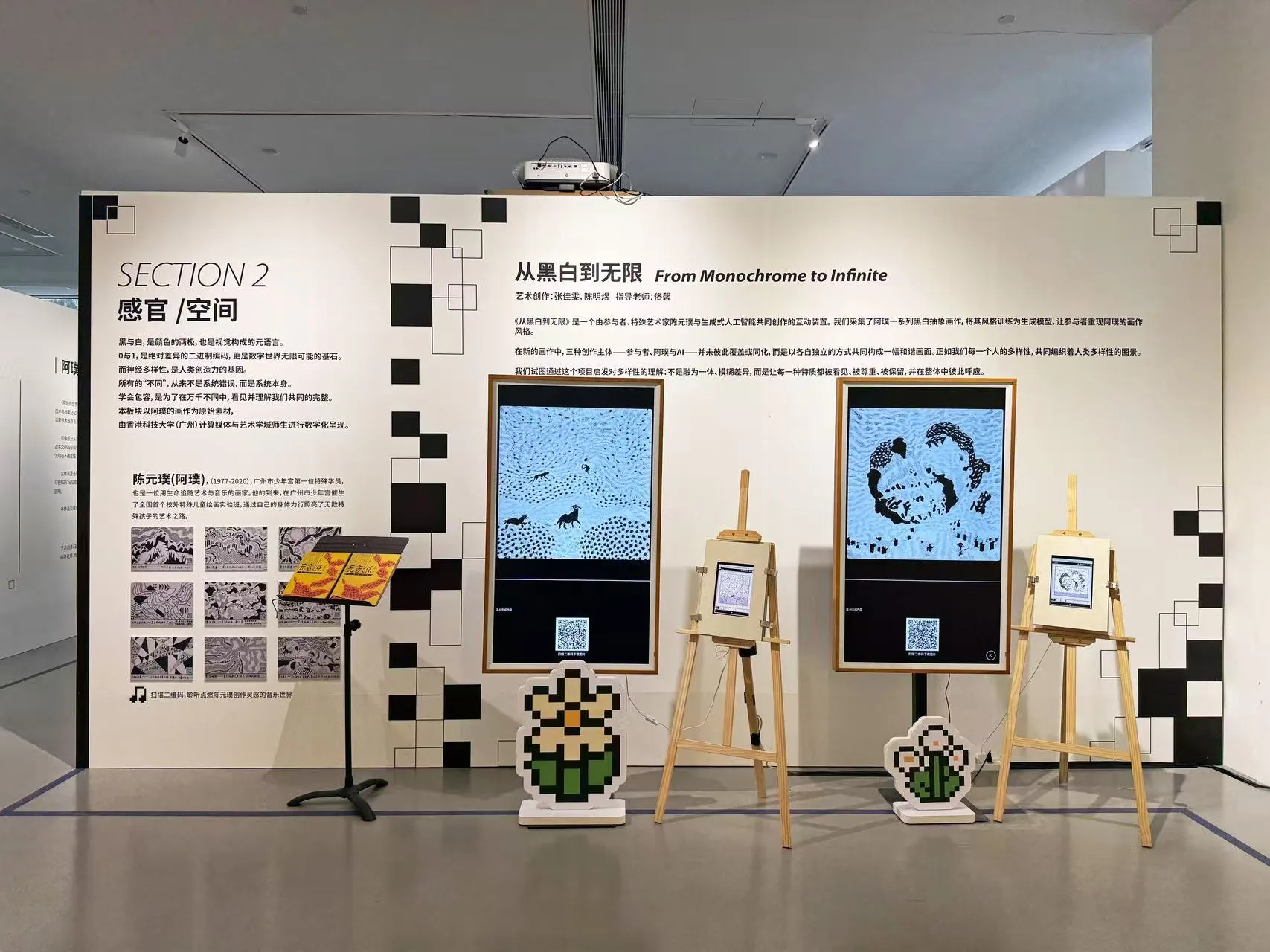
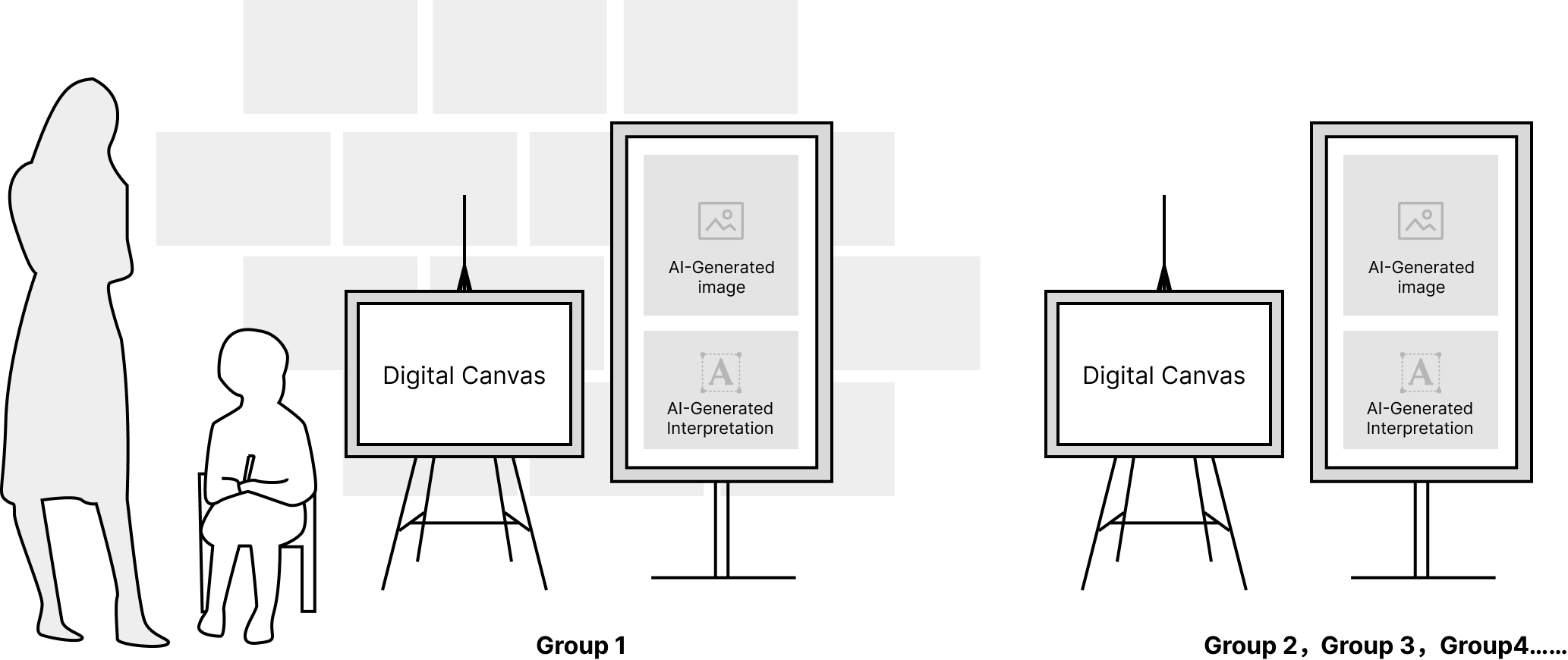
An interactive AI art installation consisting of two complete display units. Each unit comprises three components: a wooden easel, an electronic drawing board mounted on the easel, and a digital screen displaying AI-generated artwork.
Abstract

We present ``Harmony in Diversity'', a public AI art installation that positions AI as a mediator between audience drawings and visual grammars commonly observed in autistic children's artworks. Following two months of fieldwork and analysis of 300+ pieces from over 30 children, we distilled four computationally modelable styles and implemented lightweight LoRA adaptation on SDXL-Turbo. Using an Img2Img workflow, the system preserves users' compositional intent while infusing color, texture, and structural features characteristic of these styles, and concurrently generates interpretive texts explaining underlying creative logics. A two-week deployment at Guangzhou Library recorded ~3,500 interactions, indicating the system's dual value as both a creative tool and an empathy-building medium. Findings suggest enhanced public understanding of neurodiversity and offer practical guidance for deploying inclusive, AI-mediated art in public spaces.

Introduction

Harmony in Diversity is an interactive AI art installation that bridges neurodiversity through style transfer technology. The installation consists of two complete display units, each comprising three key components: a wooden easel providing a traditional artistic framework, an electronic drawing board mounted on the easel for user interaction, and a digital screen that displays AI-generated artwork in real-time.

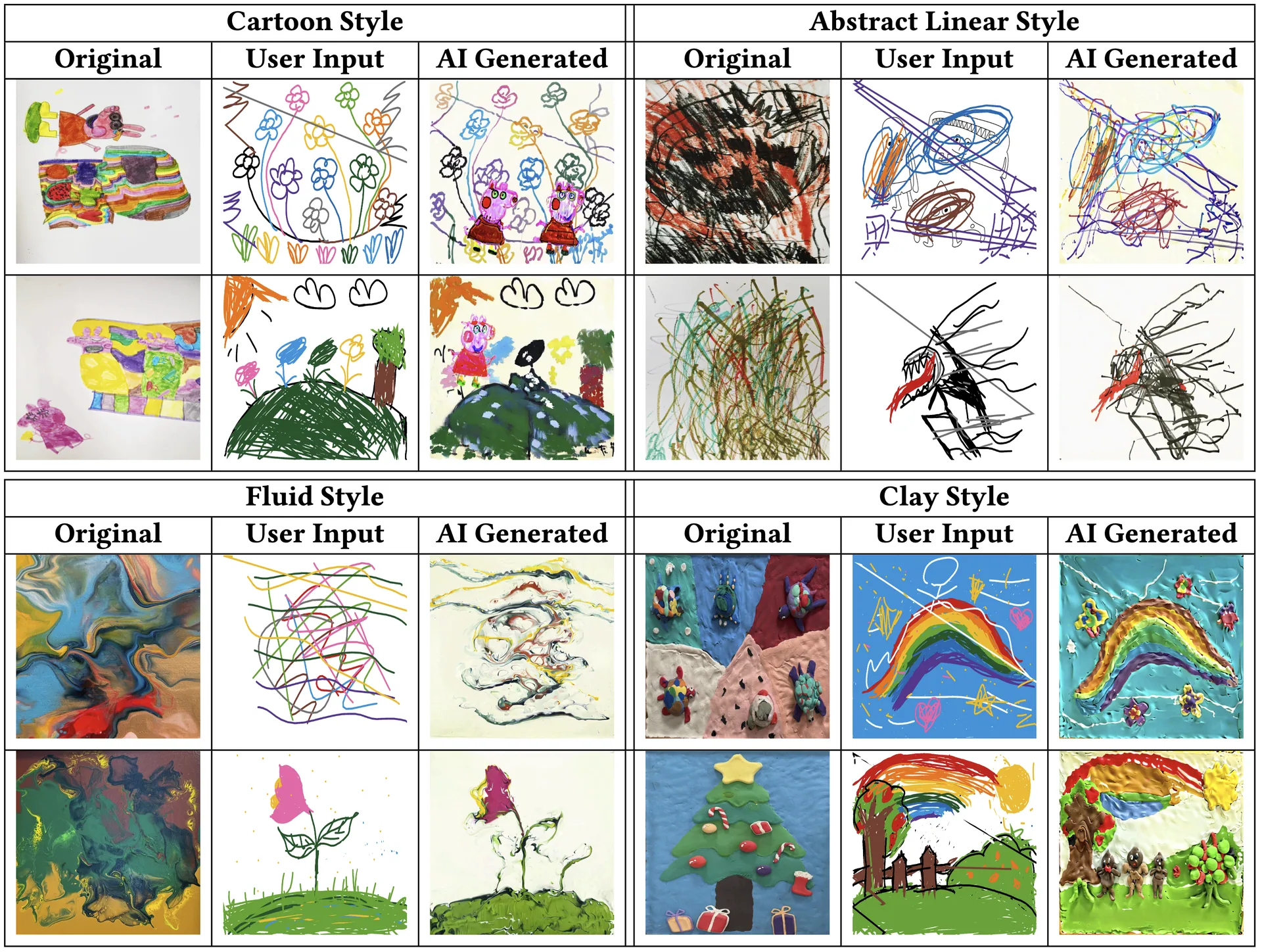
The project emerged from extensive fieldwork spanning two months, during which we analyzed over 300 artworks created by more than 30 autistic children. Through careful observation and computational analysis, we identified four distinct visual styles that could be computationally modeled. These styles capture unique color palettes, texture patterns, and structural features characteristic of autistic children's artistic expressions.

Concept Design: AI as Neurodiversity Mediator

The technical implementation leverages lightweight LoRA (Low-Rank Adaptation) fine-tuning on SDXL-Turbo, enabling efficient style transfer while maintaining computational feasibility for public deployment. The system employs an Img2Img workflow that preserves users' compositional intent—the fundamental structure and elements of their drawings—while seamlessly infusing the distinctive visual characteristics of the identified artistic styles.

Beyond visual transformation, the system concurrently generates interpretive texts that explain the underlying creative logics and stylistic features. This dual output—both visual and textual—serves to enhance public understanding of neurodiversity by making visible the unique creative expressions and visual grammars of autistic children.

Design concept of the interactive installation

Figure 1: Design concept of the interactive installation.

Creation Process

The creation process involved extensive fieldwork and computational modeling. Following two months of fieldwork and analysis of 300+ pieces from over 30 children, we distilled four computationally modelable styles. Each style captures unique color palettes, texture patterns, and structural features characteristic of autistic children's artistic expressions.

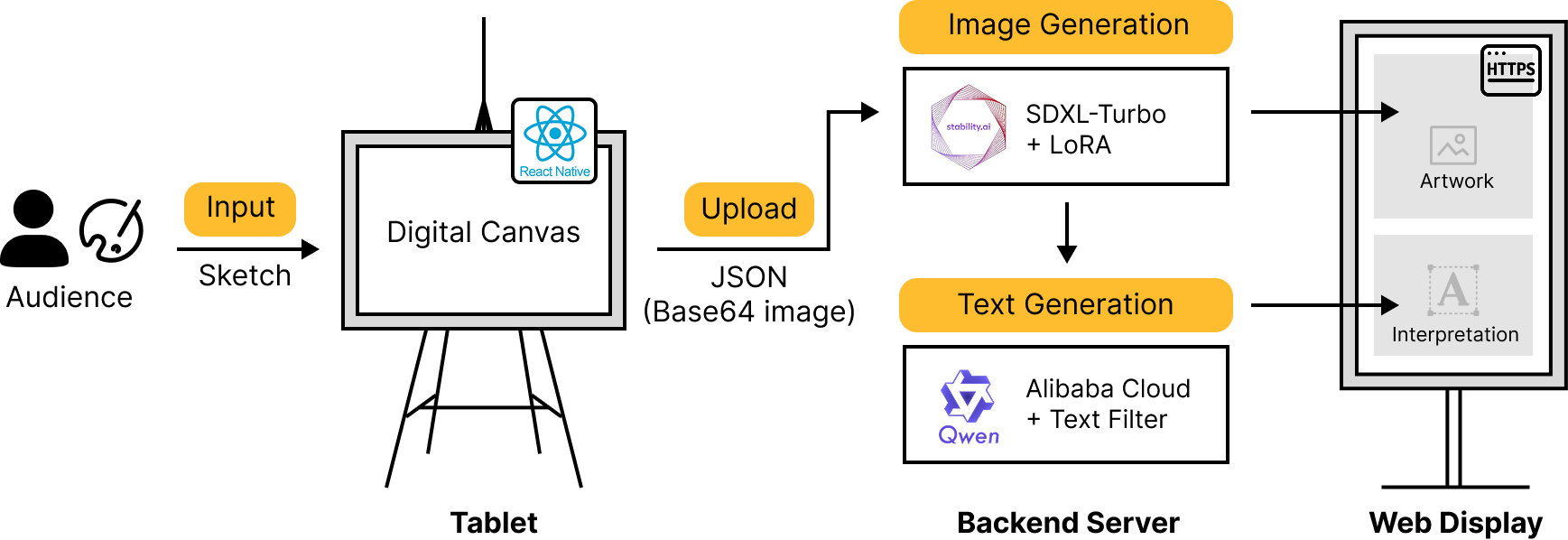
The system architecture integrates tablet input with web-based display, enabling real-time style transfer and interpretation. Users draw on the electronic drawing board, and the system processes their input through the Img2Img workflow, preserving compositional intent while infusing the distinctive visual characteristics of the identified artistic styles.

Style Transfer Results Comparison

Table 1: Style Transfer Results Comparison.

System architecture and workflow

Figure 2: System architecture and workflow - from tablet input to web display.

Results

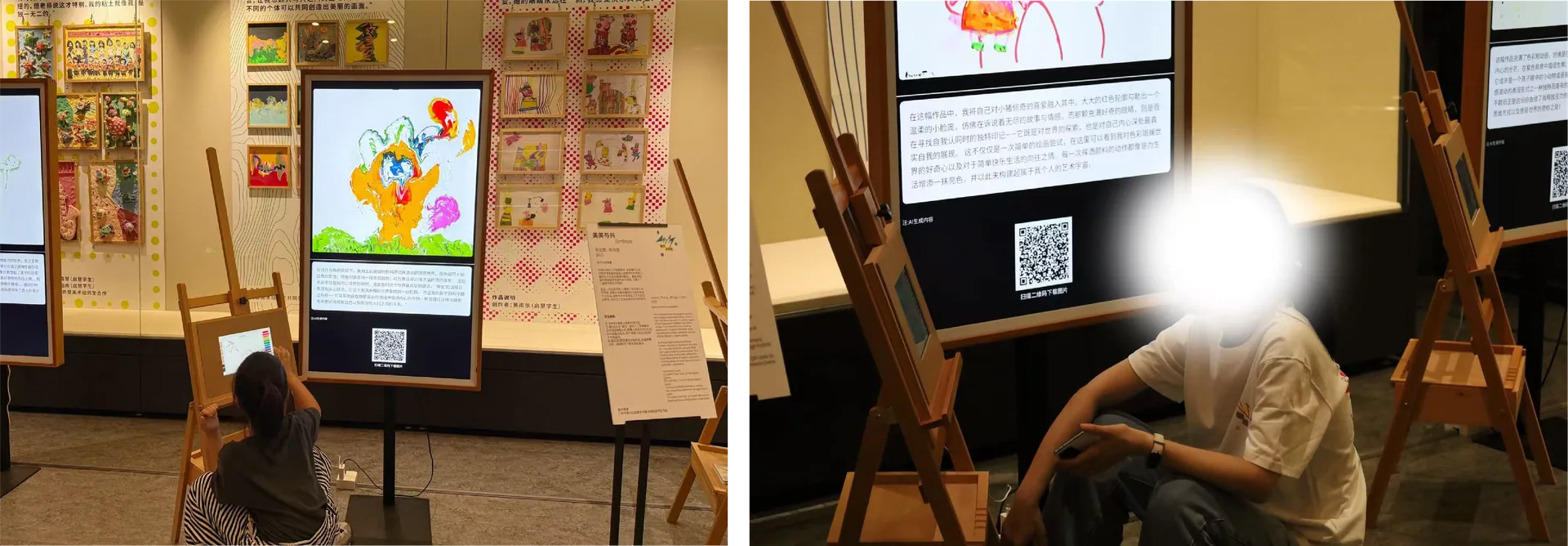
Visitors actively engaging with the installation

Figure 3: Visitors actively engaging with the "Harmony in Diversity" interactive digital installation at Guangzhou Library.

The installation was deployed at Guangzhou Library for two weeks, during which it recorded approximately 3,500 interactions. This extensive public engagement demonstrates the system's dual value: it functions both as a creative tool that enables users to explore new artistic possibilities, and as an empathy-building medium that fosters understanding and appreciation of neurodiverse artistic expressions.

Findings from the deployment suggest that the installation successfully enhanced public understanding of neurodiversity. Participants reported increased awareness of the unique creative perspectives and visual languages of autistic children, moving beyond deficit-based narratives toward appreciation of diverse forms of expression. The project offers practical guidance for deploying inclusive, AI-mediated art installations in public spaces, demonstrating how technology can serve as a bridge between different ways of seeing and creating.

Conclusion

Harmony in Diversity represents a novel approach to public art that leverages AI as a mediator between different forms of creative expression. By computationally modeling and translating visual grammars from autistic children's artworks, the installation creates a space for dialogue, understanding, and appreciation of neurodiversity. The project demonstrates the potential of AI-mediated art installations to serve as inclusive platforms that celebrate diversity while fostering empathy and connection in public spaces.

The Team

Xin Tong

Dr. Xin Tong

Principal Investigator (PI)

Jiawen Zhang

Jiawen Zhang

Researcher

Mingyu Chen

Mingyu Chen

Researcher

Loading...